Before the Lights Go Up: 5 Backstage Habits to Calm Stage Fright Fast

Performer peers through red stage curtains before an entrance

The Biology of the Final Ten Minutes

The final ten minutes before a performance can feel strangely physical. Your pulse accelerates, your hands become unsteady, your mouth dries, and your attention narrows until every possible mistake seems immediate. A presenter may reread the opening sentence for the tenth time. A musician may feel the instrument slip slightly in the hands. An actor may experience a sudden blankness despite knowing the lines. These sensations are not evidence that you are unprepared or incapable. They are the visible effects of an adrenaline surge preparing the body to act.

The fight-or-flight system increases heart rate, changes breathing patterns, redirects blood flow, and raises muscle readiness. It is designed to help you respond quickly, not to make you feel comfortable. Trying to argue with that response through willpower alone often adds another layer of tension. The more useful approach is immediate and physical: regulate breathing, reconnect with sensory information, release constriction, and give the energy a more accurate label. The following five-minute protocol is not psychotherapy. It is a practical backstage reset for the moment when your body needs direction before your thoughts can catch up.

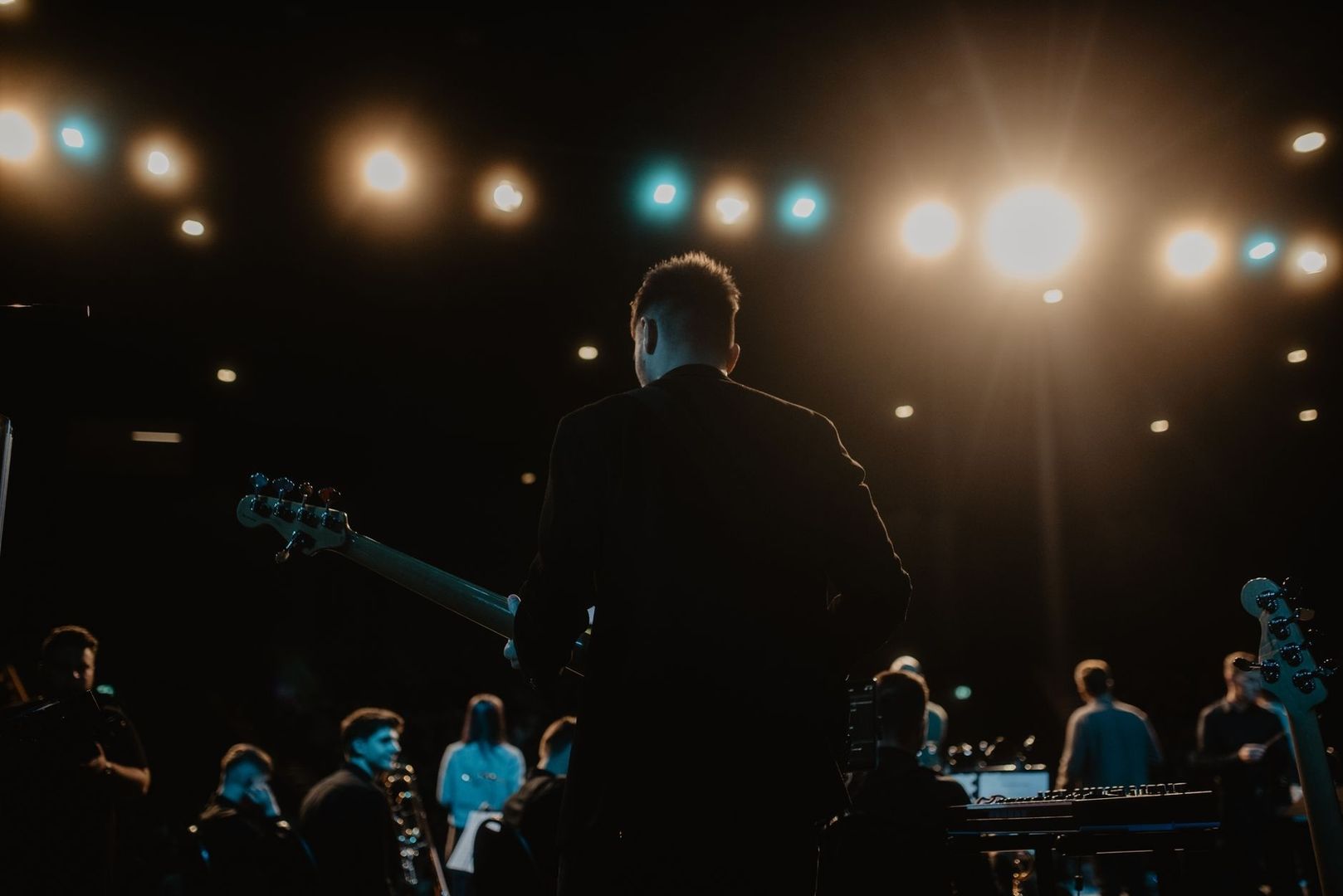
Musician facing bright stage lights with a bass guitar and audience nearby
Backstage preparation works best when rising arousal is given a clear physical sequence to follow.

Resetting the Nervous System with the Physiological Sigh

Stage fright often begins with shallow chest breathing. Rapid, incomplete breaths can make the body feel starved of air even when oxygen levels are adequate, while carbon dioxide can accumulate enough to intensify dizziness, tingling, and tremor. A physiological sigh offers a discreet mechanical reset. It uses two consecutive inhalations followed by one long exhalation. The first breath expands the lungs; the shorter second breath helps reopen air sacs that may have collapsed during shallow breathing. The extended exhale then reduces respiratory drive and encourages the body to move away from escalating alarm.

This is not about taking the biggest breath possible. Overly forceful breathing may make light-headedness worse. Keep the action controlled and quiet, with the shoulders relaxed and the exhale noticeably longer than either inhalation. Understanding how rapid respiratory adjustments halt nervous tremor gives performers an immediate anchor when the body begins to race.

  1. Inhale gently through the nose.
  2. Take a second, smaller inhalation before exhaling.
  3. Release the breath slowly through the mouth, allowing the exhale to last roughly twice as long as the combined inhale.
  4. Repeat the sequence for five to ten cycles, taking approximately 90 seconds.

During the final few cycles, notice whether the exhale is becoming smoother rather than chasing a particular feeling. The goal is not instant serenity. A reduction in breath urgency, shoulder tension, or hand tremor is enough. If nasal breathing is uncomfortable because of congestion or the demands of a costume, use gentle mouth breathing without straining. Anyone with a respiratory or cardiovascular condition should adapt the exercise conservatively and follow medical guidance.

Tactile Anchoring to Escape the Mental Echo Chamber

Adrenaline can pull attention entirely inward. Instead of seeing the room, you monitor your pulse. Instead of hearing the conversations around you, you replay a possible error. This mental echo chamber makes the backstage environment feel unreal and deprives the brain of useful spatial information. Tactile anchoring interrupts that loop by giving attention a simple, neutral task in the present environment.

Professional speakers and stage artists rely on physical stabilization cues before stepping into the spotlight, often through repeatable routines rather than dramatic motivational rituals. Elite divers, for example, use carefully sequenced thoughts and actions to regulate attention, pace, emotion, and behavior before performance. A backstage version can be small enough to remain invisible.

  • Press both heels firmly into the floor for three seconds, then release without locking the knees.
  • Touch the edge of a lectern, instrument, costume seam, or prop and identify its temperature and texture.
  • Press the thumbnail lightly into the side of a finger, using pressure that is clear but never painful.
  • Notice one stable visual feature, such as a doorway, floor mark, lighting stand, or curtain fold.

Use a three-point sensory check when thoughts begin spiraling. First, identify three things you can see. Second, notice two physical sensations, such as the shoes against the floor or the fabric at the wrist. Third, listen for one sound at a comfortable distance. Then add one deliberate movement, such as lowering the shoulders or turning the head slowly. This sequence re-establishes the body as a participant in the room rather than a problem to be analyzed.

Choose cues that can be repeated in rehearsals and on performance days. A heel press before the first sentence, a thumb-to-finger contact before a vocal entrance, or one touch of the instrument before playing can become a reliable threshold signal. The cue does not need mystical meaning. Its value comes from consistency, which reduces the number of decisions required under pressure.

Re-labeling Adrenaline from Panic to Readiness

Once the body is activated, the mind tries to explain the sensations. A racing heart can become “I am losing control,” while sweaty palms become “Everyone will notice.” That interpretation may increase threat perception and consume working memory. Research by Alison Wood Brooks at Harvard Business School found that anxiety and excitement share a high-arousal physiological profile. In studies involving singing, public speaking, and mathematics, participants who said “I am excited” performed better than those instructed to force themselves to feel calm. The original Harvard research on excitement reappraisal supports a practical point: arousal is often easier to redirect than to suppress.

Forcing calm can feel false because the body is clearly not calm. That mismatch creates another performance demand. Re-labeling keeps the energy while changing its meaning. Say the phrase silently or aloud in a steady voice: “This is readiness.” “The energy is available.” “I am excited to begin.” The statement should be believable, not inflated. The aim is to move from a threat mindset, in which the audience is judging you, to an opportunity mindset, in which the audience is waiting for useful information, music, or a story.

Automatic interpretation Performance-oriented pivot
My heart is racing, so something is wrong. My body is increasing energy for the opening.
My hands are shaking and everyone will see. My hands are activated; steady contact will guide them.
I might forget everything. The first line is the only task required right now.
The audience is waiting for failure. The audience is waiting for clarity, value, or connection.

Use one label consistently for the final minutes. Repeating five different affirmations can become another form of mental noise. A concise phrase paired with a physical action works better: press the heels down and say, “Ready to enter.” The phrase is not a demand to feel fearless. It is an instruction about how to use the existing state.

Unlocking the Vocal Mechanism and Jaw Tension

Stage fright commonly tightens the structures that support communication. The masseter muscles may clench the jaw, the tongue may pull backward, and the soft palate may become less mobile. Performers can then experience a constricted throat, a dry or thin sound, difficulty articulating, or a voice that feels disconnected from the breath. These reactions are understandable: the body is preparing for action, but it is prioritizing survival-style muscle readiness over nuanced vocal control.

Backstage release should be gentle and silent. Let the jaw drop as if beginning a quiet yawn, keeping the teeth separated and the lips soft. Extend the tongue forward for two or three seconds, then let it rest. Repeat without stretching aggressively. A sub-audible hum can provide light vibration through the lips and face, but it should never become a forceful vocal warm-up. Musicians and speakers can also use a silent “ng” position, feeling the tongue arch without squeezing the throat.

  • Separate the teeth and make two slow, relaxed jaw drops.
  • Roll the shoulders once backward and allow the neck to lengthen.
  • Extend the tongue gently, release it, and repeat twice.
  • Use a quiet hum or imagined hum for three relaxed exhalations.
  • Touch the tongue tip lightly to the ridge behind the upper teeth, then swallow normally.

The final tongue-tip contact can stimulate saliva production and remind the mouth to stay mobile. Keep water nearby and take small sips rather than repeatedly gulping, which can create more throat awareness. Avoid chewing gum immediately before speaking or singing if it encourages jaw activity. The target is not a perfectly loose face. It is enough freedom for the first phrase to emerge without fighting unnecessary muscular resistance.

The Five-Minute Sequential Countdown Routine

A reliable countdown reduces improvisation at the exact moment when attention is most vulnerable. Elite athletic routines are rarely built around a single inspirational thought. They combine physical preparation, attention control, pacing, and a repeatable sequence. Research on elite divers similarly describes pre-performance routines as organized behaviors that regulate thoughts, emotions, and actions across distinct stages. A performer can borrow that logic without copying a sport-specific ritual.

Keep the routine short, quiet, and portable. It should work in a conference room, a theater wing, a green room, or the side of a stage. The sequence below assumes five minutes remain, but it can be compressed if a stage manager, host, or musical cue changes the timing.

  1. Minute five, discharge excess tension. Stand with feet hip-width apart. Shake out the hands, loosen the wrists, roll the shoulders, and bend the knees twice. Avoid frantic movement. The purpose is to prevent adrenaline from becoming rigid posture.
  2. Minute four, establish contact with the room. Press the heels into the floor, feel the prop or lectern, and complete the three-point sensory check. Look at one fixed object and let the eyes move slowly rather than darting around.
  3. Minute three, regulate the breath. Perform five to ten physiological sighs. Keep the exhale long, quiet, and unforced. If the breath becomes uncomfortable, return to ordinary breathing and simply lengthen the next few exhalations.
  4. Minute two, release the vocal channel. Drop the jaw gently, relax the tongue, take a small sip of water if needed, and use a soft hum or silent resonance exercise. Rehearse only the first phrase, not the entire presentation in your head.
  5. Minute one, project purpose. Say one believable readiness statement, then visualize the first thirty seconds in practical detail: where the eyes will land, how the feet will feel, and what the opening sentence will sound like. Finish with the chosen tactile cue.

The most important part is the entry threshold trigger. Choose one action that occurs immediately before crossing the curtain line or walking to the microphone. It might be a heel press, a thumb-to-finger touch, one slow exhale, or a brief look toward the first audience section. Pair it with a compact instruction such as “Begin with connection” or “Deliver the first point.” This trigger should not ask for confidence. It should direct behavior.

Once on stage, protect the first thirty seconds from unnecessary speed. Plant the feet, take the first usable breath, and allow the opening phrase to finish before accelerating. For speakers, that may mean looking at one receptive face or one section of the room. For musicians, it may mean feeling the instrument”s contact points before entering. For performers, it may mean taking one deliberate beat in the light. The first moments are not a test of whether fear has vanished. They are the bridge between preparation and participation.

Step Out and Claim the Space

Stage fright is raw fuel waiting for direction. The pounding heart, heightened attention, and muscular readiness are not automatically enemies. They become disruptive when they are interpreted as proof of danger and left without a physical channel. Breath regulation lowers the escalation, tactile cues restore spatial awareness, vocal releases remove mechanical interference, and re-labeling turns alarm into usable readiness.

The objective is not to eliminate fear before every performance. It is to control the state well enough to act with precision while fear is still present. Own the first breath, the first movement, and the first thirty seconds under the lights. Once the performance has begun, attention can move outward toward the audience, the music, the message, or the scene. The body may still be energized, but it is no longer waiting for danger. It is doing the work it came prepared to do.

Best Ways To Listen To Music

Music is a large part of many people’s lives, reflecting their personal emotions and allowing us to enjoy different situations to the fullest. Listening to music can be a healing activity, or can boost one’s mood whilst at a party. Here are some of the best ways you can listen to music, allowing you to get the most out of the experience.

Party’s

Music has long been associated with party’s, particularly dance music, whether it be a late night dancing session in a nightclub or a high energy children’s party in someone’s garden. When using music at a party, if you’re attending a bar or club then you’ll want to go to a venue that you know plays music you’re into. Partying venues like clubs will often have themes and tailor to specific groups of people, such as rock clubs or nightclubs hosting an 80s music night. Whatever your personal vibe is, research the best venue in town to go to and get your boogy on!

If you’re hosting a party yourself, you may wish to compile a playlist and invest in a good speaker to blast out the music for all to hear. Popular streaming apps can make putting together the perfect party playlist fairly straight forward, and most will have a lot of premade playlists for you to choose from too. Ensure you include something for everyone in attendance, so all tastes can be catered to wonderfully.

Relaxing at Home

If you’re seeking to unwind from the stresses of life, putting on your favorite music and sitting on the sofa can help you to relax. Choose music that’s appropriate to your mood, get yourself sat comfortably and simply let the music wash over you. You may even wish to read a book whilst you’re doing this and listening to your favorite tunes. When it comes to your couch at home, Ikea couch covers can protect the furniture from any damage. Ikea couch covers are also a great addition to a sofa as they can totally change the style, such as freshening things up with a new color. Any music fan will enjoy using Ikea couch covers to ensure no drinks can damage the sofa and to create a cozier and more relaxing place to enjoy music in.

Whatever your music taste, you can enjoy your favorite songs I’m a wide range of scenarios.

Decor for a music room

Listening to music is one of the best ways to relax, and playing an instrument is said to relieve a lot of stress. If you have space in your home, why not create a room or small corner that is dedicated to music and relaxation.

How to decorate a music room

If you start with the walls and floor, choose plain, muted colors and not overly patterned carpets and wallpapers. If you include too many patterns in a space, especially if that space is small, then it will feel very busy which is not at all conducive to a relaxing environment.

The colors you choose are very important. You might be a lover of bright yellows and lime greens and that is all great in an appropriate space, but they have the effect of stimulating the mind rather than relaxing it, so try sage greens and shades of brown, neutral colors invoke the same feelings you get when out it nature, away from the hustle and bustle of a stressful life.

Plants

Include plants in your music room as a way to bring a little of the outside in. You don’t even have to be green fingered to bring healthy plants into your life you can use a plant identification app to get help with what will make your plants thrive.

Plant apps

A plant identification app like getplanta will ensure you pick the right plants for your music room. It means even those with no experience of keeping plants, can have a beautiful botanical space within their homes. A plant identification app will even guide you to the best place in the room to put the plants you have bought. It will tell you whether your plants likes sunny or shady spaces, if it needs to be watered daily or barely at all. There is no way you can go wrong when keeping plants if you use a plant identification app.

Wall hangings

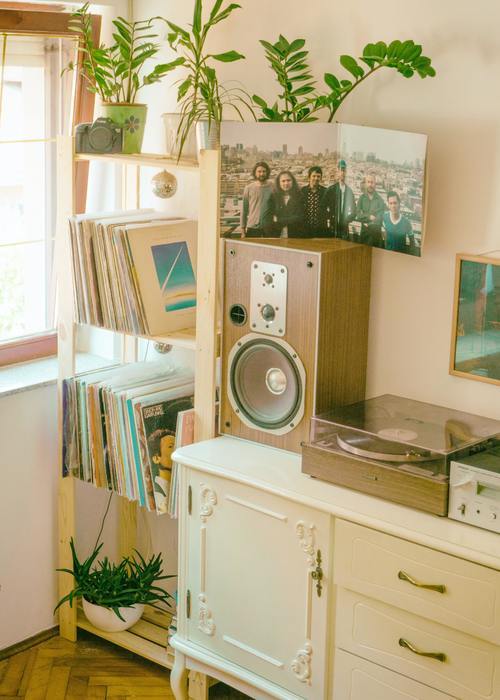
If you have chosen plan walls you might want to hang something with a musical theme as a bit of a feature. Instruments are a good choice and if you don”t have any guitars to hand you may be able to pick up a couple from a second-hand shop. Another popular choice is to use old vinyl records. If you have a prized collection you might want to frame a few of your favorites, especially those that have interesting cover art.

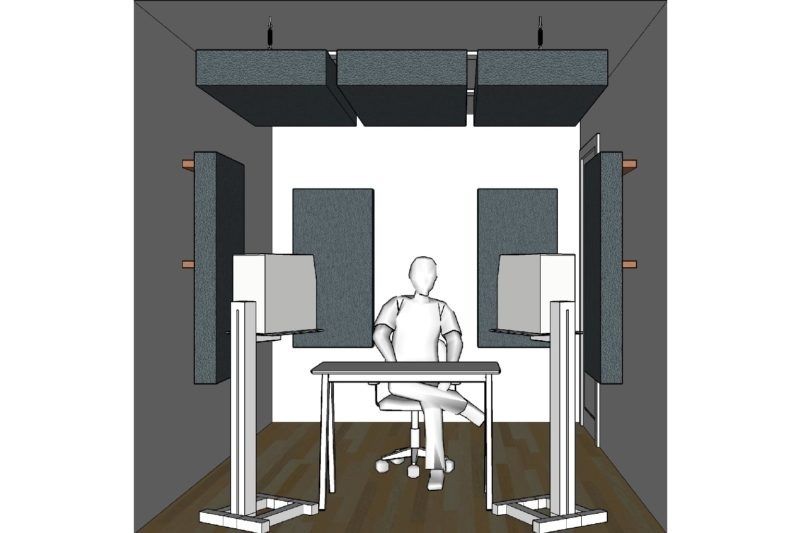
Sound proofing

If you are going to be playing instruments and have near neighbors, you might also want to consider a little sound-proofing on your music room. It can help with the acoustics within the room and also stop your neighbors and the rest of your family being upset with you because of sudden loud noises.

Seating areas

If you have the space, you might want to add a small seating area, such as a two-seater couch or a couple of armchairs. That way your friends or family have somewhere comfortable to sit when they listen to you rehearse or play. Or alternative, just somewhere for you to sit back while you listen to your favorite radio station.

Why Female Musicians Wear Leggings

It is essential that musical artists wear the proper attire while performing on stage. The clothing items need to both look great and provide a decent level of comfort. Female musicians will commonly wear leggings due to their versatility. The website Aim’n is the perfect place to find these. There are numerous reasons why performers will want to seek out high-quality leggings.

Dancing Around the Stage

In the past female artists may have preferred long flowing dresses while on stage. However, these garments can restrict movement.

Some businesses have even reported returns of dresses recently. Modern tastes appear to have significantly changed. Meanwhile, sportswear has seen a significant surge in popularity. As a result, it is now considered a mainstream form of street fashion. When worn by musicians, it allows the person to dance freely. This is due to the elasticity of the fabric.

Staying Comfortable

Sometimes gigs can go on for many hours. If the outfit is uncomfortable, it will distract the performer and hinder their show. The history of women’s sportswear clearly shows that comfort takes precedence. Customers will find that the leggings from Aim’n feel great even when worn for extended periods of time. It should also be noted that musical shows take a lot of energy. Sweating will be inevitable. Therefore it is wise to choose an attire that would commonly be seen inside a gym.

Slimming Black Leggings

Practicality is just one factor to consider. Aesthetics are also critical. The musician will need clothing that flatters their body shape. Black items tend to be preferred due to the fact that they appear slimming. Research has also shown that vertical stripes also have this effect. If the performer feels self-conscious, then darker leggings will be more appealing. They can showcase their music without body confidence issues getting in the way.

Wearing Trendy Patterns

On the other hand, the person may desire something more bright and colourful. Aim’n does not just supply black leggings. Their catalogue also contains a plethora of patterned ones in different hues. The aim of stage garb is to stand out and make a big impression on the audience. Musicians with a more “out there” persona can benefit from colourful leggings.

A Laid Back Recording Experience

This type of clothing is also helpful for situations offstage. For example, while making a new album, the person needs attire that is practical. They will be stuck inside a recording studio for numerous hours. Comfortable leggings are ideal. It is crucial to pick reliable ones that have longevity. Doing so will ensure that the musician can wear them throughout their career.

Music Inspired Home Decor

Many music fans around the world enjoy taking their love for music to the next level by incorporating it into their home decor. You may be a little stuck for ideas when it comes to combining your love for music with the decoration of your home, but continue reading this article for some awesome tips.

Artworks

Art has often used musical themes, with many pieces of artwork having noticeable elements of music in them or being inspired by some of the great musicians from across the globe. Music is a joyful art form that brings people together, and so is art in general such as painting and sculptures. If you”d like to introduce some musical themes within your home decor, consider using wall art prints to help bring out more of this aspect of your interests. Wall art is brilliantly versatile, with so many different pieces to choose from. You could get wall art prints of your favourite singer, or prints that depict the concert going experience like images of packed-out auditoriums. Whatever your personal tastes are, artworks and prints for your walls are sure to be available that will meet your desires perfectly and fit in with the rest of the room.

Furnishings

Furnishings can be found and used in such a way that your passion for music will be clear for all to see. You can also choose to be creative with your furnishing choices, such as using music stands for placing photo”s in a room or using piano stools for some seating. If grand is your style, then a well placed piano can be used as a centre-piece to a room that draws attention, whilst also being playable so you can play some music of your own.

Whatever choices you make when decorating your home, your enjoyment of music is sure to be a great source of inspiration.

Musicians Need to Look After Their Health

Whatever form of the music industry you participate in, it is essential that you look after your health and wellbeing as well as the inevitable demands of promoters, record labels, and tours. The better you feel, the more you are likely to be productive and energetic. It is therefore highly recommended to embark on a fitness regime while on the road, or attending photoshoots for your new release, or playing live concerts. It is here where Aim’n can help with their unique range of designer activewear.

Why Consider Aim’n?

This is a company started by women and employing an in-house team of female designers specifically for women, especially suiting performers. Whatever fitness regime you choose, you can be sure that aimn.com.au can offer a perfectly designed range of sportswear to meet your needs. Whether you decide to swim, work out in the gym, jog, or cycle, they can offer the perfect designer garments to meet your needs. No one wants to suffer from burnouts on a long, arduous tour or turn up to a publicity meeting looking worn out and disheveled. Looking after your health while performing should be paramount on a musicians’ list of requirements.

Working out in the latest swimwear, jogging bottoms, sports tights, or shorts can do wonders for your self being and fitness levels. Aim’n offers a vast range of items that are all designed by the company, and with a motto of ” Aiming Higher,” they aim to inspire women to achieve their full potential. Your mantra as a musical performer should be to look good, feel good and perform well, and with the exclusive range of Aim’n clothing, you are halfway there. Designed to negate sweat marks and fit every contour of your body, their range is both practicable as well as durable. If you look after your fitness and health, you can enjoy the live performances and all of the added rewards, such as selling more records and achieving new heights.

Summary

A musician’s life can be a hard life with lengthy recording sessions and multi-date appearances all over the world. You can maintain your looks and health and feel vitalized with a suitable fitness routine. The range of Aim’n sports clothing accessories is designed to help you to achieve this whatever your profession. With many unique designs, you can be sure to stand out from the crowd. Have a look at the online Aim’n website today, and you won’t be disappointed. Who knows, in no time at all, you could have a big hit and a successful career to pursue.

Musician’s Skincare on the Road

If you are a budding musician or an established star, you will undoubtedly be undertaking a tour for your fans in the near future. Tours are a great way of increasing your popularity and gain you more and more fans. You can also sell merchandise and records along the way to increase your income and exposure. Many musicians will tell you that live gigs are the reason why they took up this pursuit in the first place. Nothing can beat the adrenalin rush of a live audience but, you must also take care of yourself while on the road. No public performer wants to look older than they have to on stage, and Verso Skincare has a range of products to rejuvenate and protect your skin. These products have been designed and tested by experts and often contain secret ingredients only available from this range.

Why Verso Skincare?

This company provides a complete range of skincare products designed to keep your skin looking young and consequently give you a better stage presence. They have a wide range of products ranging from Verso Number 1 to Verso Number 10 designed for all eventualities. After a hard night on the stage, your skin will have been exposed to the lights from the show, and by applying this range of products, you can mitigate any damage. Featuring everything from cleansing products, eye serums, and night creams to lip creams, you can rest assured that your skin will continue to look in tip-top condition. These creams also reduce wrinkles and slow down the signs of aging so that you can look good at each and every gig.

All performers should consider these products to ensure they maintain youthful and healthy skin. Often featuring unique ingredients such as Retinol 8 and widely known vitamins such as Vitamin A, these products come highly recommended. They cleanse, moisturize, energize and strengthen the skin, protecting your looks against the aging process. The products also address common skin conditions such as acne and can treat oily, dry, or mature skin with ease. Their easily navigable website contains details of all the products online. It is recommended that everyone use at least one Vitamin A product each day, and this range can provide you with all that you need.

Summary

No musical performer likes getting old, but with the help of Verso skincare products, you can ensure your skin stays healthy for as long as possible. Gigs can be an arduous and stressful occasion, especially if you are on a major tour and you need to consider looking after your skin to keep that healthy look. There is nothing worse than turning up for a publicity event or photoshoot with poorly maintained skin. Using Verso skin products can help you look after your whole body and improve your physical and mental wellbeing, thereby enabling you to continue with your tour in good health. Check the Verso site out today, and you won’t be disappointed.

Getting a Record Label Contract

As a professional musician, your ultimate goal is undoubtedly to get a recording contract with one of the big labels in the music industry. However, this can take some time, and you may find that your only option is to sign with a lesser-known label. This can be pretty worrying as there are many horror stories of musicians being ripped off or losing money because their contracts weren’t drawn up correctly.

Study the Small Print

Once you are presented with your contract, you need to study it carefully. Hopefully, the record label will be using contract management software which typically employs automated templates that are easy to follow. Precisely is one such company that provides tools to simplify the process of contract management. They have a solution for every industry and would be particularly suitable for a record label to monitor and control their contracts.

Check the Expiry Date

One thing to be aware of is that it would be unusual for a record label to offer a musician a lifetime contract. Typically, the initial contract would be for a specified period, such as one year. If the record company manages a lot of different artists, it would be helpful for them to set up Precisely’s smart reminder system. They would then be notified well in advance when a contract is coming up for renewal.

Insist on Privacy

As you become more famous in your career as a musician, you really don’t want any personal information contained in your contract to fall into the wrong hands. If your record label is using Precisely, you can be assured that all your details will be encrypted to the same high level of security as that used by banks and governments.

Obtaining a recording contract is your first step on the ladder to success.

Relaxing After a Gig

Whether you are a musician or simply a fan, going out to a gig can be a treat to look forward to. However, the adrenaline rush continues, even when you are back home. You need to relax and take things easy and reflect on the evening. Plus, you may be all hot and sweaty from playing or dancing and need to cool down. Knowing you have a beautifully designed bathroom ready to cater to your needs can be a pleasure at any time of the night.

Styling Your Bathroom

This can be great fun, and bathroom products are no longer as dull and boring as they used to be. Loving music as you do, there is sure to be something that catches your eye, especially if you head over to the Royal Design website and look at their gorgeous Iittala range of products. For example, if you are a heavy metal fan, perhaps you prefer darker colors. Littala has a selection of bath towels in blue, gray, and purple.

Winding Down With a Drink

Having enjoyed your relaxing bath, you can now settle down with a drink and perhaps listen to some music to remind you of your evening. The product range at littala also includes some stylish glassware. So, whether your preference is beer or champagne, there are many options. Perhaps you wish to emulate your favorite music star and will be poring yourself a whisky or two in a specially designed glass from Royal Design.

There is much to admire in the littala range at Royal Design, including candles, bedroom textiles, and lamps. They have everything you need to ensure that you end your evening of music most enjoyably. Take a bath, pour a drink, put on a CD, and revel in your memories.

The History of Music

Music is one of the most universal aspects of nature. No matter where one is from, there is a music type or genre that is easily relatable. This makes

Continue reading